Estimated reading time: 7 minutes · Last updated:
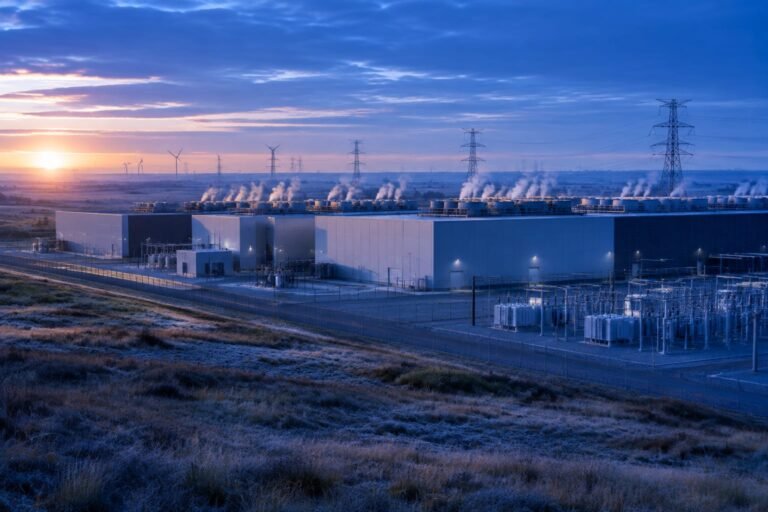
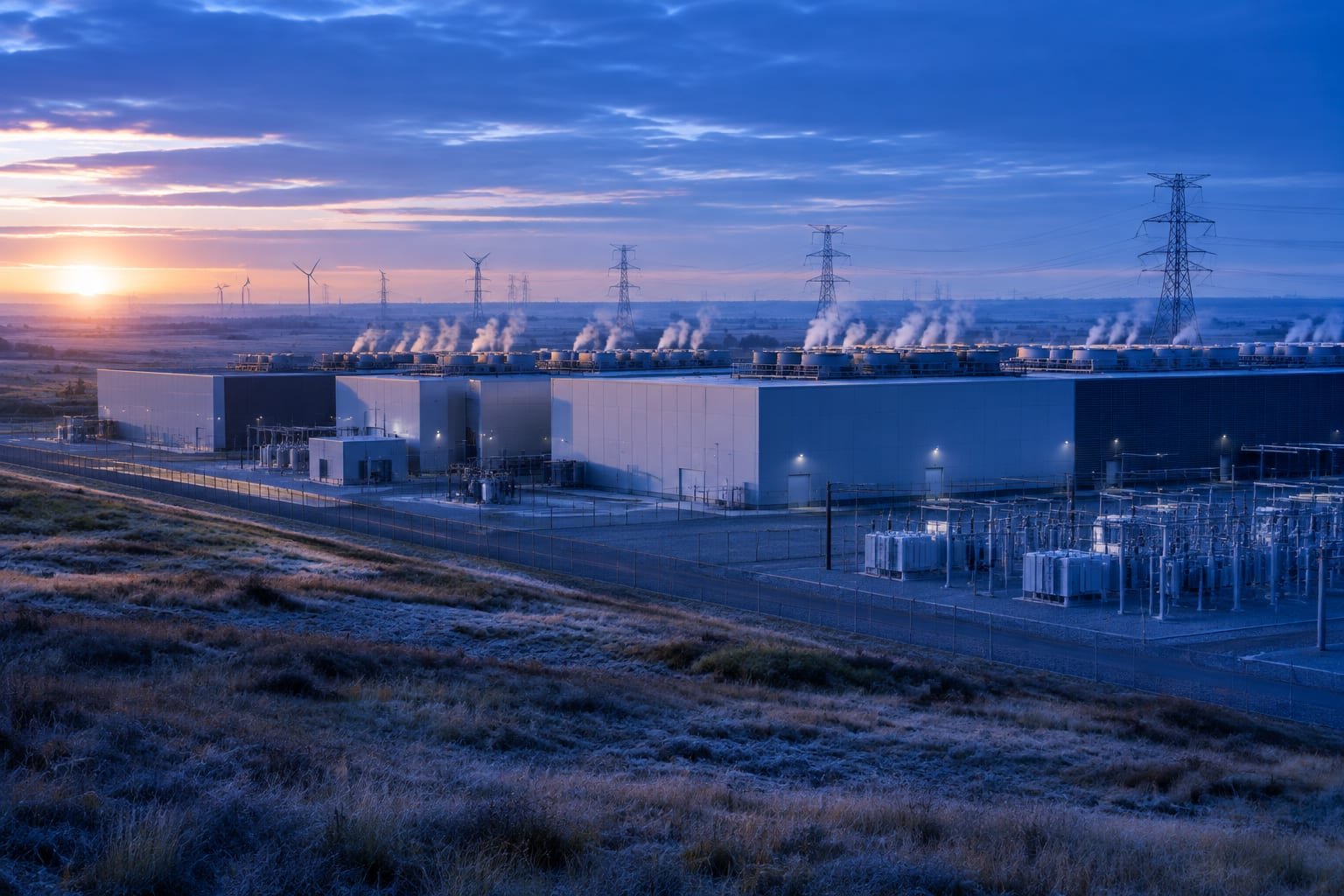
The 400 largest data centres in the United States released more carbon dioxide over one year than Denmark, a Harvard University study published in Nature Sustainability on 16 November 2026 finds. The researchers estimate that the electricity those sites drew produced about 25.7 million metric tons (28.3 million tons) of CO2, because fossil fuels generated more than half of it. The study covers May 2024 to April 2025, before the AI construction boom fully took hold, so its authors expect US data centre emissions to be higher today. The findings landed on the same day the COP31 climate talks in Antalya, Turkey, launched a voluntary clean-power pledge for data centres. The United States did not attend those talks this year.
We have hope in one hand and then harms in the other. They're selling us hope while hiding the harms from us.
Philip Newell, spokesman, Climate Action Against Disinformation
Key takeaways
- Bigger than a country: Harvard researchers estimate the electricity used by the 400 largest US data centres produced about 25.7 million metric tons of CO2 in a year, more than Denmark emits.
- Fossil-heavy power: The sites consumed 82 terawatt-hours between May 2024 and April 2025, with fossil fuels supplying more than half and coal 15 per cent.
- Earlier figures too low: Senior author Francesca Dominici says the estimate is two to three times higher than previous studies, and plans exist for 2,000 more data centres.
- A voluntary answer: The Antalya Artificial Intelligence Pledge, launched by Turkey and the International Telecommunication Union at COP31, asks for clean power and disclosure but binds no one.
Table of contents
- Key takeaways
- How Harvard Sized Up 403 Data Centres With Little Company Data
- Why Today's Emissions Are Likely Higher Than the Study Shows
- What the Antalya Pledge Asks and Why It Pulls Two Ways
- Can AI Pay Back Its Own Carbon Debt
- Will data centre emissions keep rising
- What to be careful about
- Frequently asked questions
How Harvard Sized Up 403 Data Centres With Little Company Data
Harvard's team examined 403 hyperscale facilities across the US over twelve months, May 2024 through April 2025. Hyperscale data centres are the giant server campuses that cloud and AI companies run. Operators publish little about their power draw or pollution, so the researchers paired the data they could find with modelling to estimate electricity use and the emissions behind it.
Their estimate puts annual consumption at 82 terawatt-hours. The researchers say that amount could run nearly seven million homes for a year. Fossil fuels generated more than half of it, and coal, the dirtiest of the major fuels, supplied 15 per cent on its own.
Francesca Dominici, the study's senior author and a Harvard biostatistics professor, said the total is two to three times what previous studies had found. She likened it to the CO2 output of a state like Michigan or a small European country. Fengqi You, a Cornell University energy systems scientist who was not involved, said impacts cannot be managed without reliable measurement and disclosure, and that AI's footprint depends on where centres are built, how efficiently they run and what supplies their power.
Why Today's Emissions Are Likely Higher Than the Study Shows
The study window closed in April 2025, and building has only accelerated since. The Harvard researchers say that means the sector's emissions are probably larger now than their estimate. Lead author Gianluca Guidi, a postdoctoral fellow in Harvard's Department of Biostatistics, put it this way in a press release: "What we're seeing is already striking, but it's only a snapshot of a rapidly expanding industry."
Dominici pointed to plans for 2,000 additional data centres as the reason the number worries her. "We are going backwards toward the goal of controlling CO2 emissions," she said. Those 2,000 are planned sites, not operating ones, and the study does not estimate what they would emit.
A separate signal comes from the advocacy group Climate Action Against Disinformation. Its report, published in November 2026, found that electricity use by Amazon, Microsoft and Google climbed 240 per cent from 2022 to 2025 as the AI race intensified. The group links that growth to some of the largest tech companies falling short of their climate goals, and accuses Big Tech of "greenwashing" AI by pointing to future benefits.
What the Antalya Pledge Asks and Why It Pulls Two Ways
COP31 host Turkey and the International Telecommunication Union launched the Antalya Artificial Intelligence Pledge on 16 November 2026. It asks companies and countries to run data centres on clean electricity, to use efficient energy and water systems, and to assess and publish their environmental impacts. Signing is voluntary.
The pledge also urges using AI to tackle climate change. That second aim sits uneasily beside the first, since the systems it promotes are what drive the power demand the Harvard team measured. United Nations climate chief Simon Stiell framed the stakes at the launch: "Claims about future emissions savings cannot excuse rising pollution now, making climate disasters even worse."
Earlier in the talks, on 13 November, UN Secretary-General António Guterres took aim at big emitters and the fossil fuel lobby. He called for drastic emissions cuts to hold warming below the 1.5 C limit in the Paris Agreement. With the United States absent from COP31, the country hosting the data centres in the Harvard study had no seat at the table where the pledge was written.
Can AI Pay Back Its Own Carbon Debt
The strongest counter-argument comes from Al Gore, former US vice-president and climate advocate. He said carbon-free power for data centres is essential, but he hopes their computing could find new ways to fight climate change, as first reported by The Associated Press. Gore cited British economist Nicholas Stern, who predicted that by 2030 "we will see 6 to 9 per cent reduction in emissions of greenhouse gases because of the use of advanced AI in finding new ways to be far more efficient in the use of materials and energy."
Caleb Max, president of the National Artificial Intelligence Association, went further. He said AI will solve data centres' energy problems and that "the fears may be overblown." Philip Newell, spokesman for Climate Action Against Disinformation, rejected that framing, saying the industry offers hope while concealing harms.
Public pressure is building regardless. Opposition has surfaced in US elections and in local fights over new sites. In Canada, protests have targeted a proposed $10 billion EverWind Fuels data centre in Cape Breton, Nova Scotia, for Anthropic, and a $52-billion project near Regina, Saskatchewan. Alberta, where hundreds of AI data centres are planned, has seen local pushback even after Ottawa issued guidelines for responsible development.
| Source | What it measures | Period | Figure |
|---|---|---|---|
| Harvard study, Nature Sustainability | CO2 from 403 large US data centres | May 2024 to April 2025 | 25.7 million metric tons |
| Harvard study | Electricity used by those sites | May 2024 to April 2025 | 82 terawatt-hours |
| Harvard study | Coal share of that electricity | May 2024 to April 2025 | 15 per cent |
| Climate Action Against Disinformation | Power use growth at Amazon, Microsoft, Google | 2022 to 2025 | 240 per cent |
| Nicholas Stern, cited by Al Gore | Predicted AI-driven emissions cut | By 2030 | 6 to 9 per cent |
Will data centre emissions keep rising
The case for
- The Antalya pledge pushes operators to disclose power, water and emissions data, the gap that forced Harvard to rely on modelling.
- Fengqi You says the footprint is not fixed and shifts with siting, efficiency and electricity supply, so cleaner grids cut it directly.
- Nicholas Stern predicts advanced AI could reduce greenhouse gas emissions by 6 to 9 per cent by 2030 through efficiency gains.
The case against
- More than half the power behind the 403 sites came from fossil fuels, and coal alone supplied 15 per cent.
- Plans exist for 2,000 more data centres, and the Harvard authors say emissions have likely grown since April 2025.
- The pledge is voluntary, and the United States, home to the sites studied, skipped COP31.
What to be careful about
- The Harvard figures are modelled estimates built partly on limited company disclosure, so the true total could differ in either direction.
- A voluntary pledge with no US participation may leave the largest concentration of hyperscale data centres outside its reach.
- The 2,000 planned data centres could lock in fossil-fuel demand if they connect to grids still reliant on coal and gas.
- Projections of AI-driven emissions cuts, such as the 6 to 9 per cent Stern cites, remain predictions that have not yet been demonstrated.
The bottom line
The Harvard estimate turns a vague worry into a number: roughly 25.7 million metric tons of CO2 from 82 terawatt-hours of mostly fossil-fired power, at a scale Dominici compares to Michigan. It also comes with a caveat that cuts against the industry, since it predates the fastest phase of construction. The Antalya pledge answers with disclosure and clean-power goals, yet it is voluntary and the US stayed away. Gore, Stern and Caleb Max argue AI can earn back its emissions; Newell and Stiell say future promises cannot cover present pollution. Until operators publish the data Harvard had to model, that argument will be settled by estimates rather than measurements.
What to watch
- Watch which companies and countries sign the voluntary Antalya Artificial Intelligence Pledge, and whether any publish the power, water and emissions data it calls for; no deadline has been set.
- Watch for follow-up research covering the period after April 2025, which the Harvard authors expect will show higher emissions as the 2,000 planned data centres advance; no date has been announced.
- Watch 2030, the year by which Nicholas Stern predicts advanced AI will cut greenhouse gas emissions by 6 to 9 per cent.
Frequently asked questions
Is it 400 or 403 data centres in the Harvard study?
Harvard's researchers analysed 403 of the largest US data centres between May 2024 and April 2025. The headline comparison with Denmark refers to them in round terms as the 400 largest.
Is the Antalya AI pledge binding on tech companies?
No. The Antalya Artificial Intelligence Pledge, launched by Turkey and the International Telecommunication Union at COP31, is voluntary. It asks signatories to use clean power and efficient energy and water systems and to disclose environmental impacts.
Why did the Harvard researchers have to model emissions instead of measuring them?
Companies disclose little about their power consumption and pollution, so the team combined available data with modelling. Cornell's Fengqi You said that approach was reasonable and that reliable measurement and disclosure are needed to manage the impact.
Related reading