Estimated reading time: 5 minutes · Last updated:
Helium Health is a Nigerian e-health company founded in 2016. It has secured a US$2.5 million Google.org grant to bring clinical AI models into maternal care. The money will fund HeliumMum, the company's maternal health initiative, in Lagos, Delta, Kano and Oyo states. Lagos is the main launch site. Helium Health says it aims to reach 1.9 million more women within three years and to help cut maternal mortality by 30 per cent. The award comes from Google.org's Impact Challenge: AI for Government Innovation, a US$30 million programme that selected 15 organisations worldwide. Alongside the cash, the Helium Health Google.org grant includes a place in a Google.org Accelerator programme.
Behind every maternal death is a woman whose family expected her to come home.
Dr Shona Oluwatola, head of public health at Helium Health
Key takeaways
- The award: Helium Health received US$2.5 million from Google.org, one of 15 awards from a US$30 million AI for Government Innovation challenge.
- Where it goes: HeliumMum will deploy clinical AI models in Lagos, Delta, Kano and Oyo states, with Lagos as the main launchpad.
- The targets: Helium Health aims to reach 1.9 million additional women over three years and to contribute to a 30 per cent fall in maternal mortality.
- The scale of the problem: Dr Shona Oluwatola of Helium Health said Nigeria accounts for nearly three in every 10 maternal deaths globally.
Table of contents
How HeliumMum Plans to Use AI Across Four Nigerian States
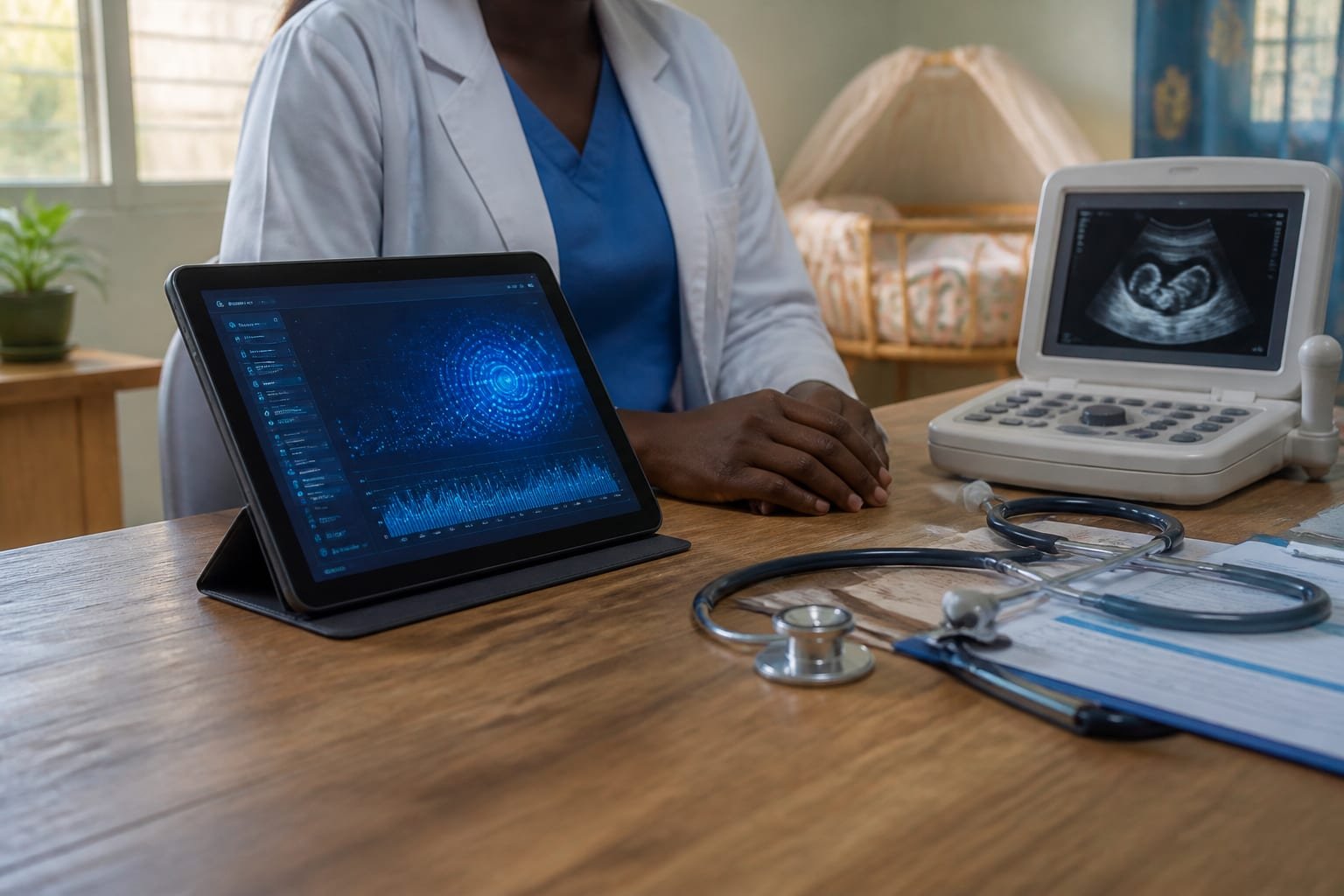
HeliumMum's AI tools are aimed first at pregnant women. The software is meant to spot warning signs of complications early. It then directs each woman to a provider who can deal with them. The aim is to catch a problem in time and make sure the woman knows where to go.
Clinicians are the second audience. HeliumMum sends women to facilities that already run electronic medical records alongside AI-powered clinical decision support. Clinical decision support is software that reads patient data and gives doctors and nurses prompts while they choose a course of care. Helium Health's flagship product is an EMR/HMIS, short for Electronic Medical Records/Hospital Management Information System. It is the software the company uses to move hospitals and clinics onto digital records.
State governments make up the third audience. Helium Health says the platform will give them data they can act on, showing where maternal services fall short. Lagos is the main launchpad, and Delta, Kano and Oyo complete the list of target states.
What Google.org Is Adding Beyond the Money
Google.org's Impact Challenge: AI for Government Innovation has a total pot of US$30 million, shared among 15 recipients worldwide. Helium Health's US$2.5 million is roughly one-twelfth of that. The average award across the cohort works out at US$2 million, so the Nigerian grant sits above it. The challenge funds organisations that partner with governments to improve public services.
The cash is only part of the award. Helium Health will join a Google.org Accelerator programme built for the cohort, where Google engineers and AI product specialists provide technical help. Helium Health is putting clinical models into public health facilities, so that engineering access is a substantial part of the package.
Maggie Johnson, global head of Google.org, described the support as backing the people nearest the problem. "By equipping the 15 selected organisations with funding and pro bono support from Google's own AI experts, we are empowering the people closest to the problem to show what is truly possible," she said.
Why Nigeria's Maternal Death Toll Shapes the Targets
Dr Shona Oluwatola, head of public health at Helium Health, said Nigeria accounts for close to three in every 10 maternal deaths worldwide. She added that each of those deaths leaves behind a family that had expected the woman back.
Helium Health is not starting from zero. The company says its maternal health programmes have served more than 3.5 million women across the past decade. Adding the 1.9 million it now targets would bring the total to about 5.4 million.
The mortality goal needs careful reading. Helium Health speaks of contributing to a 30 per cent fall, not achieving it alone. That means results will also depend on the states and hospitals HeliumMum connects to. The grant is new, and the outcomes it is meant to drive are years away.
What could help or hold back HeliumMum
The case for
- HeliumMum builds on existing maternal health work that Helium Health says has served more than 3.5 million women.
- The Google.org Accelerator gives the company technical help from Google engineers and AI product specialists, not just cash.
- Starting in Lagos lets the model be tested in one main launchpad before it extends to Delta, Kano and Oyo.
The case against
- US$2.5 million is a small sum against a problem Dr Shona Oluwatola puts at nearly three in 10 maternal deaths globally.
- Referrals only help if women reach facilities that already have electronic records and decision support, which ties outcomes to infrastructure Helium Health does not control alone.
- The 30 per cent mortality goal is framed as a contribution, which makes it hard to credit any change to HeliumMum specifically.
What to be careful about
- Clinical AI models deployed in public facilities could misjudge complications, and Helium Health has set out no published safeguards for this.
- The government data element depends on state authorities in Lagos, Delta, Kano and Oyo acting on what the platform reports.
- The 1.9 million reach target over three years is a company goal, and no start date for that period has been given.
The bottom line
The Helium Health grant is a modest sum set against a very large problem. Its value lies as much in the support around it as in the cash. HeliumMum combines three things: early warning for pregnant women, referral to digitally equipped facilities and data for state governments. That design matches what Google.org's challenge was set up to fund. The measurable promises are 1.9 million additional women over three years and a contribution to a 30 per cent cut in maternal deaths. Lagos will show first whether the model holds up, before Delta, Kano and Oyo test it in different conditions. Until results arrive, those targets remain ambitions stated by the company, not outcomes on record.
What to watch
- Watch for the first HeliumMum deployments in Lagos, which is named as the main launchpad; no start date has been given.
- Watch for what Helium Health builds during the Google.org Accelerator programme with Google engineers and AI product specialists; no dates have been set out.
- Watch for progress reports against the target of 1.9 million additional women over three years; no starting point for that period has been given.
Frequently asked questions
What does Helium Health do?
Helium Health is a Nigerian e-health company founded in 2016. Its flagship product is an Electronic Medical Records/Hospital Management Information System that moves hospitals and clinics onto digital records. HeliumMum is its maternal health initiative.
What is the Google.org Impact Challenge: AI for Government Innovation?
It is a US$30 million Google.org programme that backs organisations working with governments to improve public services. It selected 15 recipients worldwide, including Helium Health. Winners also receive pro bono support from Google AI experts through an accelerator.
How many maternal deaths happen in Nigeria?
Dr Shona Oluwatola, head of public health at Helium Health, said Nigeria accounts for nearly three in every 10 maternal deaths globally. Helium Health is targeting a contribution to a 30 per cent reduction in maternal mortality.
Related reading