
Estimated reading time: 5 minutes · Last updated:
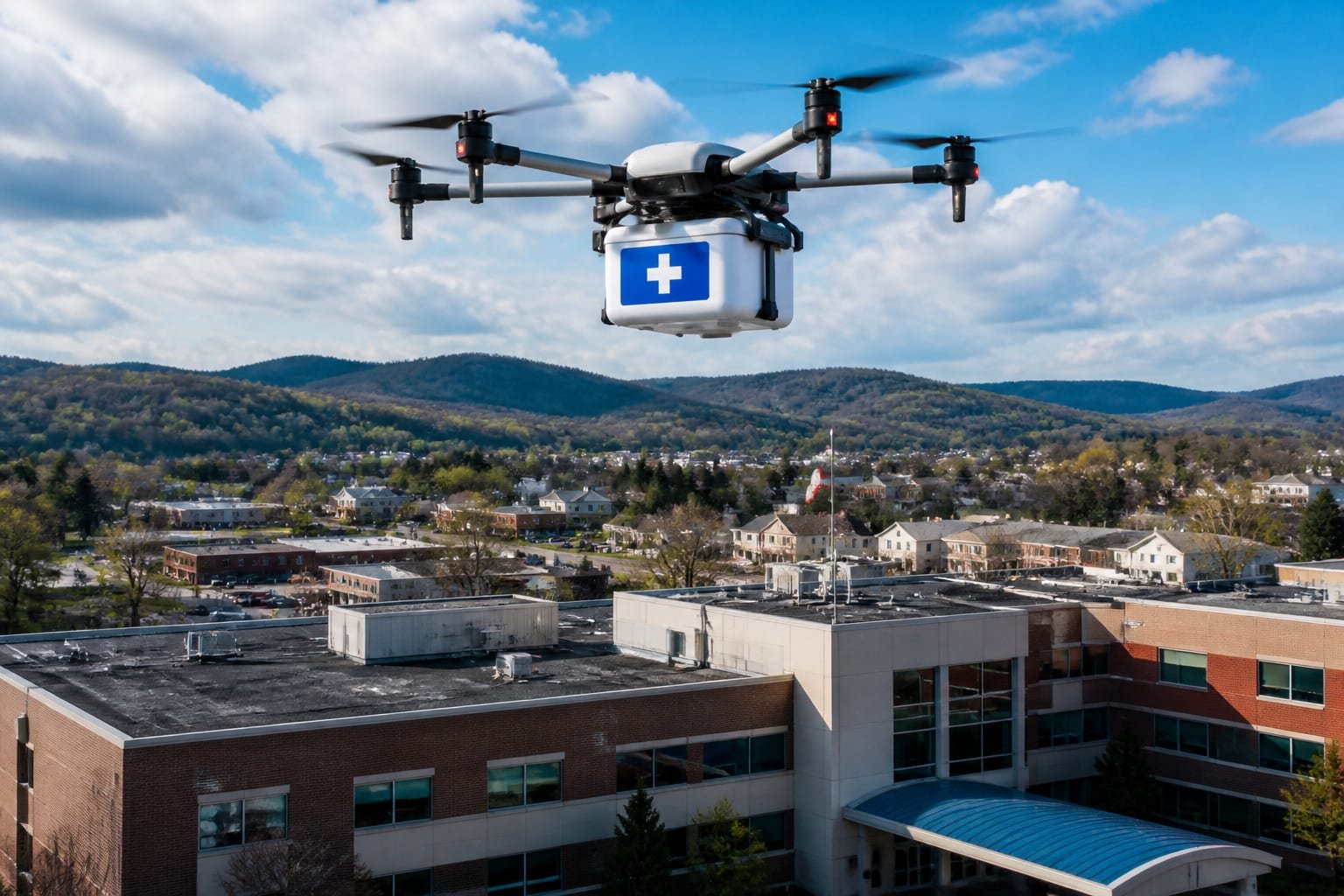
Munson Healthcare and Traverse Connect launched the second phase of a medical drone trial running from 6 October 2026 to 30 October 2026 to expand sample deliveries beyond the one-mile routes tested in 2025. Phase two will fly between Munson Medical Center (MMC) in Traverse City and the Crystal Lake Health Center at 5191 Rosewood Drive, a route the material says is about three miles, beginning with visual observers and moving later to BVLOS operation pending regulatory approval. Partners on the programme include Central Michigan University’s Rural Health Excellence Institute and Michigan drone maker blueflite. This development was as first reported by The Ticker.
The research and operational data gathered will inform best practices for statewide and national adoption, establishing a replicable model for rural healthcare drone integration.
Warren Call, president and CEO of Traverse Connect
Key takeaways
- Phase timeline: Phase two runs from 6 October 2026 to 30 October 2026 and will operate between MMC and Crystal Lake Health Center (5191 Rosewood Drive).
- Phase-one results: Phase one in spring 2025 ran 67 test flights over an 11-day period within a one-mile radius and recorded a 91 percent success rate.
- Payload handling: Phase-one flights kept clinical payloads at an average of 17.3 degrees Celsius, within the required range for laboratory specimens.
- System scale: Munson Healthcare operates eight hospitals across 14,667 square miles in 29 counties and its staff currently drive roughly 90,000 miles a year moving lab samples.
Table of contents
What phase two will test and how it differs from phase one
Phase two lengthens the routes and the operational envelope tested in 2025. Where phase one confined flights to a one-mile radius around Munson Medical Center and kept crews within visual line of sight, phase two will run between MMC and the Crystal Lake Health Center, a route the material gives as about three miles. The partners have said initial flights will be conducted with visual observers; later runs will transition to BVLOS — beyond visual line of sight — once necessary Federal Aviation Administration approvals are in place.
The project will also expand the hardware and software under trial: operators will deploy multiple drones together and add sensor systems to manage the longer routes and mixed traffic conditions. Munson and Traverse Connect framed phase two as a step toward operationalising drone logistics for rural health systems, testing both the physical delivery chain and the procedural safeguards required for BVLOS work.
What phase one proved and the operational case for drones
Spring 2025’s pilot delivered 67 test flights over 11 days and produced a 91 percent success rate under controlled conditions. The flights kept payloads at an average temperature of 17.3 degrees Celsius, which the partners noted met clinical requirements for laboratory specimens during the short runs between MMC and two nearby sites: the Munson Dialysis Center and the Copper Ridge Surgery Center.
Those results underpin Munson’s operational argument. The health system covers 14,667 square miles, serves more than 540,000 residents across 29 counties and runs eight hospitals; staff currently drive approximately 90,000 miles each year to move lab samples. The partners say drone links could cut staff driving time and standardise sample transit times across widely dispersed facilities, though scaling from one-mile hops to multi-mile BVLOS routes brings new engineering and regulatory demands.
Regulatory hurdles, technical gaps and the path to wider adoption
BVLOS operations remain tightly regulated, and the project has been waiting on special FAA waivers to expand beyond visual line of sight. Project leaders present phase two as both a proof of concept for longer medical routes and a data-gathering exercise to shape best practices. Traverse Connect described the research as informing statewide and national adoption, while Munson framed the work as moving the system toward routine operational use across rural sites.
Key gaps the partners intend to close in phase two include multi-drone coordination, sensor performance over longer legs and maintaining specimen temperature control for extended flight durations. The partners said they will feed operational and research data into models for replication in other rural regions; whether the FAA grants the regulatory permissions necessary for routine BVLOS medical flights will determine how quickly those models can be deployed.
| Phase | Dates | Flights | Typical route | Operations |
|---|---|---|---|---|
| Phase one | spring 2025 | 67 test flights | within a one-mile radius | VLOS; 11-day test; 91 percent success; payloads avg 17.3°C |
| Phase two | 6 October 2026–30 October 2026 | scheduled flights (dates given) | MMC ↔ Crystal Lake Health Center (about three miles) | initial VLOS with observers; later transition to BVLOS pending FAA approval; multiple drones and sensor tech |
Case for and against wider rollout
The case for
- Drones could reduce the roughly 90,000 miles Munson staff currently drive each year to move lab samples, saving time and operating costs for a system that spans 14,667 square miles.
- Phase one’s 91 percent success rate and maintained payload temperature of 17.3 degrees Celsius provide operational evidence that short medical drone links can meet specimen-handling requirements.
The case against
- BVLOS expansion depends on Federal Aviation Administration waivers; delays or restrictions from the FAA could postpone or limit phase-two activities.
- Longer routes and multi-drone operations increase systems complexity, requiring robust sensor suites and new procedures that may expose unforeseen technical or safety issues during scaling.
What to be careful about
- Regulatory delay: FAA approval for BVLOS operations remains required and could postpone full phase-two testing.
- Safety incidents in BVLOS conditions could halt the project and make wider adoption more difficult for rural systems.
- Longer flight durations may challenge temperature-control systems validated in one-mile hops, risking specimen integrity if not managed.
The bottom line
Phase two moves the Munson drone delivery trials from short, tightly controlled hops to multi-mile routes that will test both technology and regulation. The partners have framed the October window as an operational step toward a model other rural systems could reuse, but success now hinges on the FAA’s willingness to permit BVLOS piloting and on proving multi-drone, sensor-led operations can preserve specimen integrity over longer legs. The phase-one metrics — 67 flights, an 11-day test, a 91 percent success rate and an average payload temperature of 17.3 degrees Celsius — give the project a measured case to build from, but the path to routine medical BVLOS services will require more technical validation and regulatory clearance.
What to watch
- 30 October 2026 — scheduled end of the phase-two flight window between Munson Medical Center and Crystal Lake Health Center.
- October 2026 (undated within month) — flights planned to transition to BVLOS pending FAA approval; watch for the first BVLOS run and any waiver notices.
Frequently asked questions
How long does phase two run and what route will it use?
Phase two runs from 6 October 2026 to 30 October 2026 and will operate between Munson Medical Center and the Crystal Lake Health Center at 5191 Rosewood Drive, a distance the source gives as about three miles.
What did phase one demonstrate about drone sample delivery?
Phase one, conducted in spring 2025, completed 67 test flights over an 11-day period, achieved a 91 percent success rate and maintained payloads at an average of 17.3 degrees Celsius for clinical samples.
Who are the project partners running the trials?
The programme is led by Munson Healthcare and Traverse Connect, with participation from Central Michigan University’s Rural Health Excellence Institute and Michigan drone maker blueflite.
Related reading