
Estimated reading time: 4 minutes · Last updated: 2026-08-21
Brazil will invest about 2.3bn reais to expand national AI infrastructure, splitting money between projects involving Chinese firms and a separate tender expected to draw US suppliers. As first reported by Reuters, the government said roughly 1.3bn reais will fund a Rio de Janeiro supercomputing effort developed with Huawei Technologies and iFlytek, while about 1 billion reais will go to a tender for a second machine to be installed in Rio Grande do Norte. The Rio Grande do Norte site was chosen for its energy potential, and officials said the new capacity will support development of large language models and other AI applications.
The strategy is not to depend on a single company, technology or country,
Lula’s administration
Key takeaways
- Brazil will invest about 2.3bn reais (reported as $444.2m) to strengthen its artificial intelligence ecosystem.
- Around 1.3bn reais (reported as $251m) will fund a Rio de Janeiro supercomputing infrastructure project with Huawei Technologies and iFlytek.
- About 1 billion reais (reported as $193.1m) is allocated to a tender for a supercomputer to be installed in Rio Grande do Norte.
- The cooperation agreement with the Chinese companies is scheduled to start in July 2027, and the government expects the machine secured by the tender to begin operating by the end of next year.
Table of contents
What Brazil is buying and where the machines will sit
The package totals roughly 2.3bn reais and splits into two distinct projects. One is an infrastructure programme in Rio de Janeiro budgeted at 1.3bn reais and developed in partnership with Huawei Technologies and iFlytek; the other is a competitively procured supercomputer paid for with about 1 billion reais.
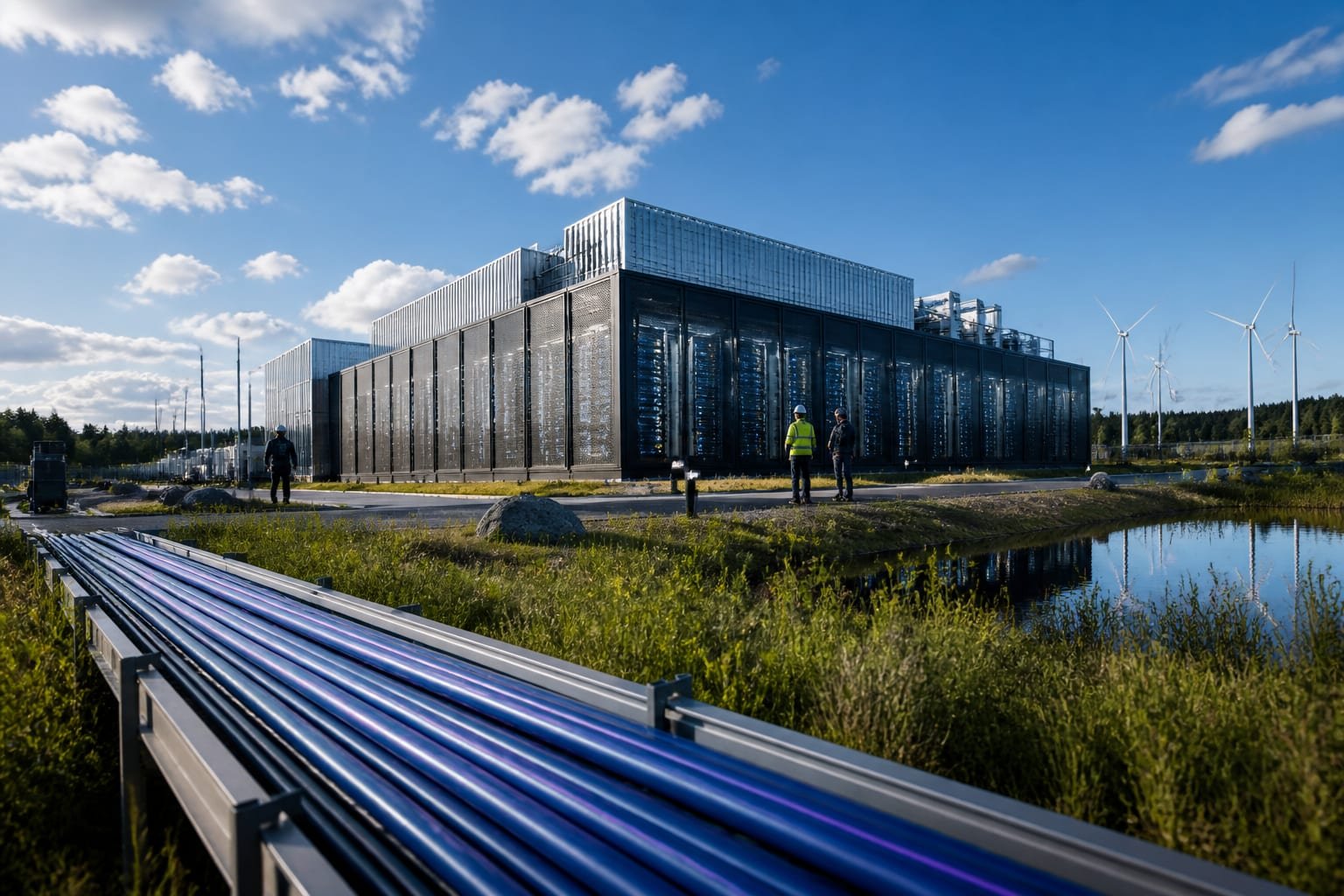
The tendered machine is slated for installation in the northeastern state of Rio Grande do Norte, chosen specifically for its energy potential. The government has said the systems are intended to expand capacity for commercial and sector-specific AI workloads and to provide national processing resources controlled under domestic protocols.
Funding will come from the National Fund for Scientific and Technological Development (FNDCT) and is planned as phased disbursements through that vehicle, the administration added.
How the government frames the strategy and its geopolitical balance
The administration described the approach as an attempt to avoid technological dependence on a single foreign source while securing rapid capacity gains. In its statement it said, "The strategy is not to depend on a single company, technology or country," framing the split between Chinese partnerships and an open tender as deliberate policy.
China is already Brazil's largest trading partner and is a prominent player in AI, while the United States remains the biggest source of foreign direct investment in Brazil. The government presented the twin-track plan as a way to preserve data governance inside Brazil while engaging suppliers from both countries.
That balance carries political as well as technical aims: the partnerships and purchases are presented as strengthening national sovereignty over data and reducing reliance on any one vendor or jurisdiction for critical AI processing capacity.
Timeline, supplier odds and the procurement signal
Officials told Reuters they expect US chipmaker Nvidia to win the tender for the Rio Grande do Norte machine, and Science and Technology Minister Luciana Santos told Folha de S Paulo she anticipated the company would be the supplier. That expectation has been reported publicly but the tender remains a competitive process.
The cooperation agreement with Huawei and iFlytek is scheduled to begin in July 2027, a concrete date the government published. Separately, the administration said it expects the tendered supercomputer to start operating by the end of next year, a short-term operational target tied to the phased FNDCT funding plan.
The mixed sourcing—Chinese partners on one project, an open tender on the other—signals a procurement posture that values redundancy and multiple supply chains even as it seeks machines among the world's most powerful AI processors.
| Project | Partners / Expected supplier | Location | Funding |
|---|---|---|---|
| Supercomputing infrastructure | Huawei Technologies and iFlytek | Rio de Janeiro | 1.3bn reais ($251m) |
| Tendered supercomputer | Expected: Nvidia (quoted by Reuters) | Rio Grande do Norte | About 1 billion reais ($193.1m) |
The case for and against the plan
The case for
- Increased domestic compute will let Brazilian institutions train and run large models under national governance, supporting data sovereignty and local applications.
- Splitting projects across suppliers reduces single-vendor risk and can speed capacity deployment by running parallel procurement tracks.
The case against
- Partnerships with Chinese firms may provoke political or trade pushback from other partners concerned about strategic technology links.
- If the tender consolidates around a single supplier, the stated goal of avoiding dependence could be undermined by concentration in procurement.
What to be careful about
- Geopolitical friction from sourcing parts of the programme from Chinese companies while courting US suppliers.
- Delays or staggered disbursements from the FNDCT could push back the operational start date.
- Procurement outcomes that favour a single vendor would contradict the administration's stated diversification strategy.
The bottom line
The new funding package formalises a mixed-sourcing strategy: a sizeable China-linked programme in Rio de Janeiro and a competitively procured machine in Rio Grande do Norte funded through FNDCT. The split aims to deliver immediate processing capacity while signalling diversification across suppliers and jurisdictions. Key milestones to watch are the July 2027 start of the cooperation agreement and the government's aim for the tendered machine to begin operating by the end of next year; both will show whether the dual-track approach accelerates Brazil’s AI capabilities without concentrating strategic dependencies.
What to watch
- Watch for the cooperation agreement with Huawei and iFlytek to begin in July 2027.
- Watch for the tendered supercomputer to enter operation by the end of 2027 (derived from the government’s statement that it should begin operating by the end of next year).
Frequently asked questions
How much is Brazil investing in AI infrastructure?
The government said it will invest about 2.3bn reais in total, a figure the reporting converts to $444.2m.
Who are the named partners and where will the machines be?
A 1.3bn reais Rio de Janeiro project is being developed with Huawei Technologies and iFlytek, while a separate machine from a roughly 1 billion reais tender is planned for Rio Grande do Norte.
When do these projects start operating?
The government set a start date for the cooperation with the Chinese companies in July 2027 and expects the tendered supercomputer to begin operating by the end of next year.