Estimated reading time: 3 minutes · Last updated:
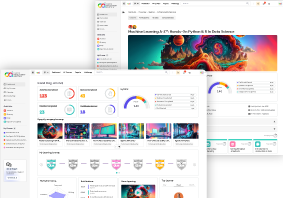
BAND for Developers is a new desktop application from BAND that centralizes how engineering teams run and supervise multiple AI coding agents across tools, machines and environments. The San Francisco-based firm says the app lets agents exchange context and hand off work so developers do not have to copy state between sessions. BAND presents a visual control plane that surfaces projects, agent assignments, activity, progress, open questions and bottlenecks. Arick Goomanovsky, BAND’s CEO and co-founder, framed the shift as developers moving from single-agent interactions to leading teams of agents, and the product is offered alongside BAND’s terminal and command-line tools.
“Developers are going from working with one coding agent to leading teams of them, but the tools around those agents haven’t evolved to support that,”
Arick Goomanovsky, CEO and co-founder of BAND
Key takeaways
- Product launch: BAND launched BAND for Developers, a desktop app to coordinate multiple AI coding agents across tools, local machines and remote environments.
- Founder view: Arick Goomanovsky, BAND’s CEO and co-founder, said developers are moving from working with single agents to leading teams of agents.
- Engineering perspective: Amit Gazal, engineering manager at BAND, said the company built the app so developers can manage agent output without disrupting other agents.
- Backers and tooling: BAND is backed by Team8, Hetz Ventures and Sierra Ventures, and the desktop app complements BAND’s existing terminal and command-line interfaces.
Table of contents
How BAND for Developers coordinates AI coding agents
BAND for Developers lets agents exchange context, delegate subtasks and pass work between sessions so state does not need manual copying. The desktop client acts as an orchestration layer that routes messages and keeps task histories for each agent.
The company presents the interface as a project-level view of assignments, activity, progress, open questions and bottlenecks, so developers can check multiple agent workflows and step in without stopping other agents. Its task histories help reconstruct decisions an agent made for audit and debugging.
Integration with development environments and workflows
Built to run alongside existing IDEs and CI pipelines, the app supports agents working in local development environments, remote machines and enterprise systems without forcing a single agent framework. That flexibility aims to reduce vendor lock-in and fit varied team setups.
BAND also offers a terminal-based interface; the desktop app complements that workflow so teams can switch between visual management and command-line controls. Teams working across microservices and monorepos should find the handoffs clearer when agents coordinate.
Adoption drivers and operational limits
Investors backing BAND include Team8, Hetz Ventures and Sierra Ventures, giving the company runway to mature integrations and developer tools. The visual control plane and CLI complement are the main selling points BAND is promoting.
Operational limits include integration work with proprietary agents, onboarding costs and security or policy constraints in enterprise environments; BAND says its infrastructure maintains visibility, operational controls and policy enforcement across distributed systems. Adoption will depend on demonstrated enterprise pilots and the breadth of supported agent integrations.
Case for and against adoption
The case for
- Centralized project-level view could reduce coordination overhead when teams run many agents.
- Compatibility with local, remote and enterprise systems makes the app adaptable to existing pipelines.
- Complementing a terminal interface offers both visual oversight and scriptable controls for teams.
The case against
- Proprietary agent APIs and vendor-specific integrations could limit out-of-the-box interoperability.
- Onboarding and workflow changes are required before teams realise efficiency gains.
- Enterprise deployments will face security and policy reviews that can delay pilots and rollouts.
What to be careful about
- Integration risk from proprietary or closed agent frameworks reducing interoperability.
- Operational overhead and onboarding costs for teams shifting to multi-agent orchestration.
- Enterprise security and policy constraints that could limit deployment speed or feature access.
The bottom line
BAND for Developers packages agent orchestration into a visual desktop control plane while keeping the existing terminal interface for scriptable workflows. The launch addresses a practical gap as teams experiment with multiple AI agents: visibility, handoffs and task histories. Success will hinge on the company’s ability to demonstrate secure, low-friction integrations with common IDEs, CI/CD pipelines and popular agent frameworks. For engineering teams, the product promises oversight and coordination; for BAND, enterprise pilots and breadth of integrations will determine whether that promise translates into steady adoption.
What to watch
- watch for BAND to publish enterprise pilot case studies; no date has been set.
- watch for a BAND product roadmap update outlining integrations with major IDEs and CI systems; no date has been set.
- watch for announcements of prebuilt integrations with popular agent frameworks; no date has been set.
Frequently asked questions
What is BAND for Developers?
BAND for Developers is a desktop application from BAND that centralizes management of multiple AI coding agents, letting teams monitor assignments, activity and bottlenecks while agents exchange context and hand off work.
How does the app integrate with existing toolchains?
The product supports agents that run on developers' workstations, in hosted or remote build environments, and inside centrally administered enterprise platforms, and it is intended to operate alongside IDEs and CI pipelines rather than replacing them.
Who backs BAND?
BAND is backed by Team8, Hetz Ventures and Sierra Ventures; the company is based in San Francisco and lists Arick Goomanovsky as its CEO and co-founder.
Related reading