
Estimated reading time: 5 minutes · Last updated:
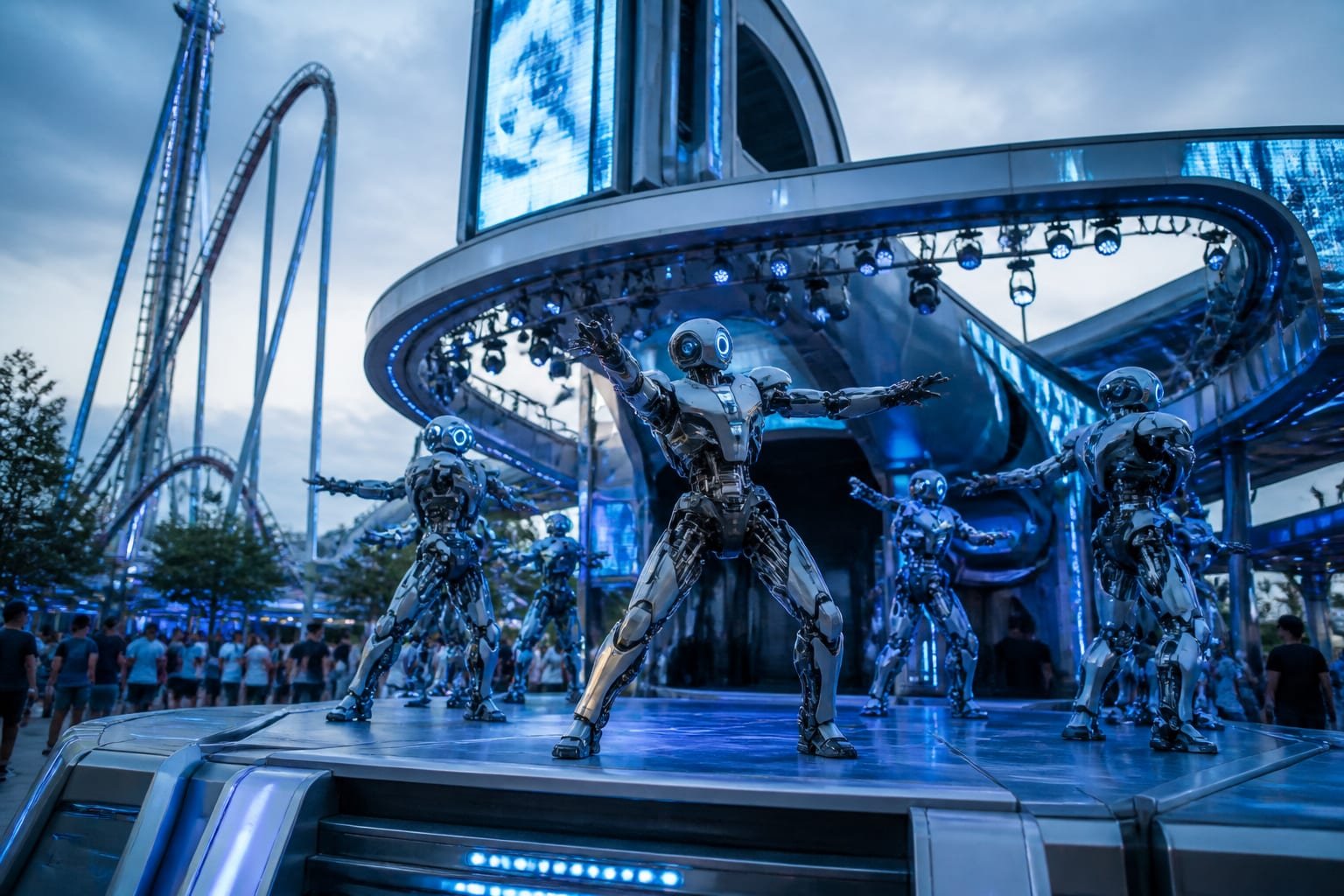
Galaxy Robot Park occupies 16,500 square metres and has opened near Seoul in South Korea. The company that developed the venue says it was created to introduce artificial intelligence and robotics into entertainment. Framed this way, the opening functions as a practical test of whether robot-led theme parks can draw one-off visitors and, crucially, persuade them to return. The operator has released only basic information; ticket prices, attendance forecasts and the technical details of the attractions have not been disclosed. Below I outline what the launch implies for the business model of robot-led attractions, sketch the commercial and operational challenges they face, and identify the specific data readers should watch next.
Key takeaways
- Venue: Galaxy Robot Park covers 16,500 square metres and has opened near Seoul, South Korea.
- Ambition: The company behind Galaxy Robot Park says it intends to introduce artificial intelligence and robotic technology into entertainment offerings.
- Test case: The park’s launch tests whether robot-driven attractions can sustain repeat visits under a theme-park model built around automation.
Table of contents
- Key takeaways
- What Galaxy Robot Park is and what is confirmed
- How robot theme parks could try to attract visitors
- Operational and cost challenges for robot-driven attractions
- What the launch could mean for theme-park strategy and next steps
- What could move this either way
- What to be careful about
- Frequently asked questions
What Galaxy Robot Park is and what is confirmed
Galaxy Robot Park is a named attraction that opened close to Seoul in South Korea and covers 16,500 square metres. Beyond the site and size, public statements have been limited: the company behind the park says the venue is intended to integrate AI and robotic systems into entertainment. The launch announcement did not include an owner name, ticketing information, attendance projections or technical specifications for the robots, and it contained no direct quotations from park management.
That narrow factual base defines what can be said with certainty. The venue exists, the stated aim is to deploy AI and robotics for entertainment, and the launch establishes a demonstrator for a business model that centres on automation. Any further claims about the park’s scale of operation, the number or type of robots on site, operating hours, staffing model or pricing would require new, attributable sources.
How robot theme parks could try to attract visitors
Robot theme parks would attempt to deliver value in three commercial ways: novelty-driven demand at opening, programmable shows and interactions that can be refreshed more cheaply than building new rides, and data-driven personalisation that increases per-visitor spend. If executed, those mechanisms could convert first-time curiosity into repeat visits by changing shows, tailoring interactions to returning guests, or offering premium personalised experiences.
The primary commercial test for any robot-led venue is whether the novelty premium—people willing to visit once to see robots—can be translated into repeat business. That requires a content pipeline that refreshes robot behaviours and attractions at a cadence visitors find compelling, and a pricing strategy that captures the extra willingness to pay without deterring broader attendance. None of those operational details are disclosed for Galaxy Robot Park; they remain plausible routes to revenue rather than confirmed features of this specific opening.
Operational and cost challenges for robot-driven attractions
Robot-driven attractions face clear operational frictions that affect the business case. Robots require maintenance, software updates and on-site technical staff for monitoring and repairs; downtime reduces capacity and visitor satisfaction. Reprogramming robots to refresh shows or personalise experiences adds development cost and requires a continuous content pipeline. These are structural expense items that scale differently from conventional rides and must be budgeted against any labour savings the park claims.
Safety and liability create another set of constraints. Automated performers operating close to visitors raise regulatory scrutiny and insurance costs; safe human–robot interaction typically demands redundancies and supervision. If those safeguards are heavy-handed, they can blunt the interactivity that forms the park’s novelty. The launch of Galaxy Robot Park demonstrates the concept at scale, but none of the available statements specify how the operator has resolved maintenance, safety certification or insurance—each a material input to the long-term economics.
What the launch could mean for theme-park strategy and next steps
The park’s opening is a visible signal that firms are prepared to invest in robot-first entertainment, even if the investment is primarily a market test. For established operators, a successful robot venue would point to new revenue lines: rotating shows with lower build costs, IP-driven merchandise tied to robot characters, and subscription-style products that reward repeat visitors. Equally, a weak commercial performance would caution against large-scale capital expenditure in robot fleets without clear evidence of repeat demand.
For Galaxy Robot Park itself, the immediate significance is empirical: the venue will generate the attendance and repeat-visit figures that decide whether the model scales. The company’s stated aim brings attention to a specific experiment, but the broader industry impact depends on hard operational metrics the operator has not yet released.
| Item | Fact in source |
|---|---|
| Venue name | Galaxy Robot Park |
| Size | 16,500-square-meter |
| Location | Near Seoul, South Korea |
| Stated aim | Bring artificial intelligence and robotics into entertainment |
What could move this either way
The case for
- If visitors respond to novelty and the operator refreshes content, robot attractions can generate above-average opening-day demand and premium-priced experiences.
- Programmability of robots allows faster content iteration than physical rides, enabling themed shows and personalised interactions that could increase per-visitor revenue.
The case against
- High maintenance, technical downtime and certification costs could erode operating margins and limit capacity compared with conventional attractions.
- If novelty wears off and the operator cannot keep experiences fresh, repeat visitation could fall below the level required to justify robot-capital expenditure.
What to be careful about
- Novelty fade: initial visitor interest may not translate into sustained repeat visits required for profitability.
- Maintenance and downtime: complex robots need skilled technicians and spare parts, increasing operating expenses and reducing uptime.
- Safety and regulatory compliance: ensuring safe human–robot interaction raises certification and insurance costs that affect margins.
- Opaque economics: the operator has not published attendance, pricing or cost figures, leaving the commercial outcome uncertain.
The bottom line
Galaxy Robot Park's opening makes a concrete claim: that AI and robotics can be the basis of a theme-park experience. The confirmed facts are narrow—the venue name, its 16,500-square-metre size and its location near Seoul, plus the operator’s stated ambition to deploy artificial intelligence and robotics. Turning that ambition into a viable business requires evidence the park has not yet released: visitor numbers, repeat-visit behaviour, pricing and the costs of running and refreshing robot attractions. The launch is therefore best read as an experiment whose commercial verdict will depend on measurable operational metrics the operator needs to publish.
What to watch
- Watch for the company behind Galaxy Robot Park to publish attendance and repeat-visit figures; no date has been set.
- Watch for the company behind Galaxy Robot Park to disclose pricing, operating hours and ticket packages; no date has been set.
- Watch for technical or safety reports from South Korean regulators relating to the park’s opening; no date has been set.
Frequently asked questions
What is Galaxy Robot Park?
Galaxy Robot Park is a theme-park venue that opened near Seoul in South Korea and occupies 16,500 square metres; the operator says it aims to merge AI and robotics with entertainment.
Who runs Galaxy Robot Park?
Public statements refer only to "the company behind the park" and do not name an owner or operator; no corporate name or management quotes are provided in the available information.
What will determine whether robot theme parks succeed commercially?
Success will hinge on attendance and repeat-visit rates, the park’s pricing strategy and the ability to refresh robot-driven attractions at a sustainable cost; those specific metrics for Galaxy Robot Park have not been published.
Related reading