
Estimated reading time: 6 minutes · Last updated:
GE Appliances has deployed more than 800 artificial-intelligence agents across manufacturing, warehousing and the supply chain, and it is using them to surface production data and automate routine tasks on the shop floor. The agents run inside a data platform the company calls Brilliant Factory and use Google Cloud’s Gemini Enterprise to answer worker queries, speed shift reviews and trigger operational actions without a data scientist in the loop. The rollout includes an agent built in 2025 that automated order-status exchanges with more than 600 suppliers and cut back orders by 25%, a result GE Appliances says freed staff for higher-value work.
“AI is now integral to the way work gets done at GE Appliances,”
Mandar Deo, chief digital officer, GE Appliances
Key takeaways
- Scale of deployment: GE Appliances has deployed more than 800 AI agents across manufacturing, logistics and supply chain operations.
- Supplier automation impact: An agent built in 2025 automated communication with more than 600 suppliers and cut back orders by 25%.
- Capital and capacity: The company has invested more than $3.5 billion in U.S. manufacturing since 2016; its Georgia plant completed a $180 million expansion.
- Factory output and parts support: GE Appliances’ parts team ships roughly 27 million parts a year to more than 700 suppliers and supports older models for at least seven years.
Table of contents
- Key takeaways
- How GE Appliances put agents on the factory floor
- Concrete effects: orders, defects and parts flow
- What the Georgia expansion shows about scale and robotics
- What this rollout implies for operations and suppliers
- Cases for and against broader rollout
- What to be careful about
- Frequently asked questions
How GE Appliances put agents on the factory floor
GE Appliances has taken what it describes as a platform approach: it runs AI agents inside a factory-wide data layer called Brilliant Factory and uses Google Cloud’s Gemini Enterprise for the underlying models. That architecture lets line supervisors or technicians ask the system for a full shift’s production data in minutes rather than waiting for a data scientist to prepare reports. The company says the agents handle tasks ranging from natural-language queries to routine operational automations, shifting routine information-gathering away from analysts and toward the people who run lines and manage schedules.
Putting the platform in place required linking production, parts and worker-activity signals across every line and shift so an agent can join the dots in context. GE Appliances describes the change as both a time-saver and a capability upgrade: employees get near-real-time answers on output, part status and quality, while individual agents can be specialized for a supplier workflow, defect detection or shift planning. Mandar Deo, the company’s chief digital officer, framed the change as an operational one: “AI is now integral to the way work gets done at GE Appliances.”
Concrete effects: orders, defects and parts flow
Not all AI projects live or die on pilots; GE Appliances points to measurable operational effects. The company says an agent launched in 2025 automated routine order-status queries across more than 600 suppliers and reduced back orders by 25%, freeing staff to focus on higher-value tasks. Separately, a tool that scans customer feedback and photos is used to detect product defects earlier in the process, which the company says improves quality and reduces rework.
Those outcomes sit beside a massive parts operation: the parts team ships roughly 27 million parts a year to more than 700 suppliers and maintains support for older models for at least seven years. Shorter feedback loops for defects, faster supplier responses and fewer manual reports all multiply when applied across hundreds of agents, which is the case GE Appliances has built into its operations.
What the Georgia expansion shows about scale and robotics
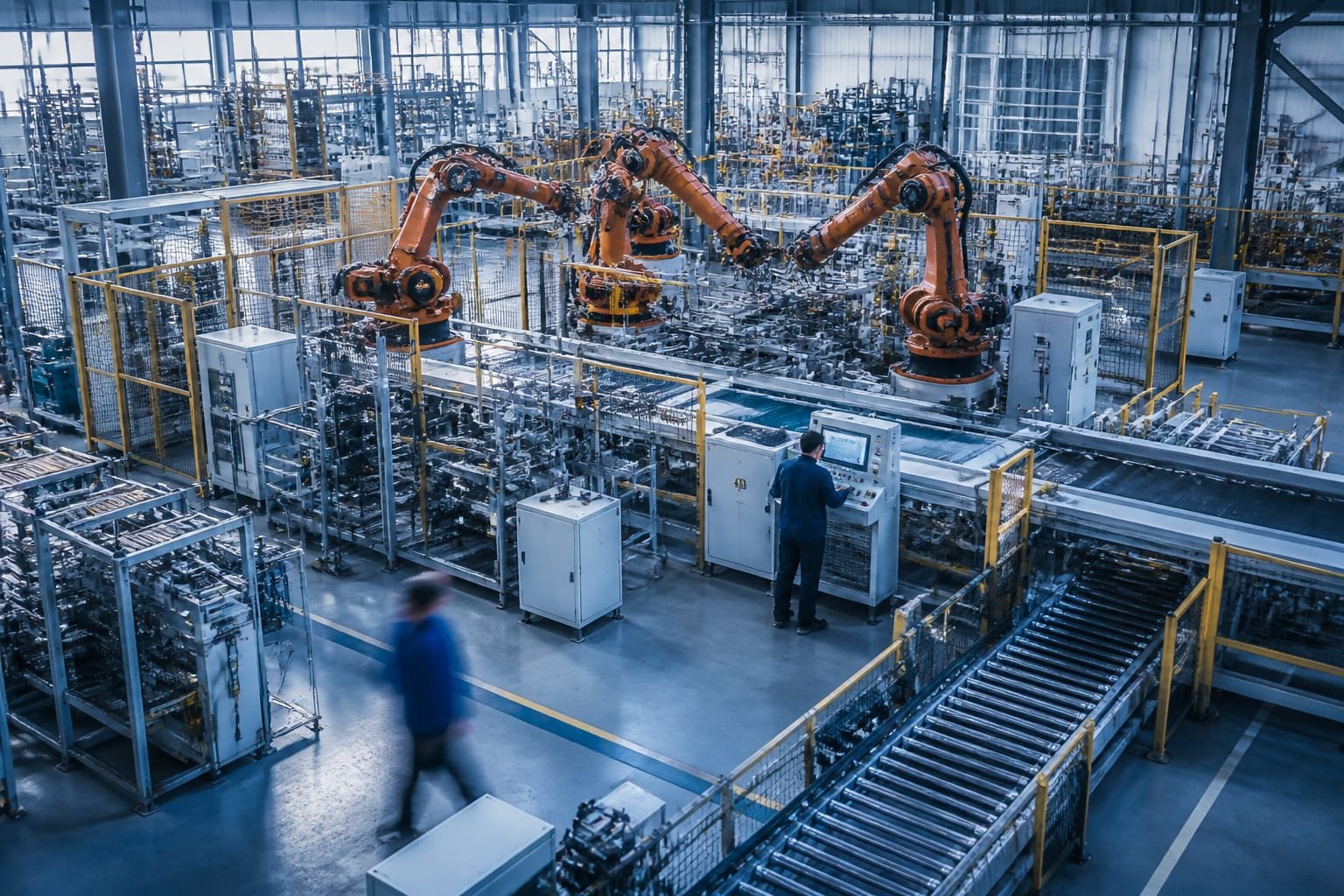
GE Appliances points to its Roper Corporation plant in LaFayette, Georgia, as an example of where investment and automation meet. The company completed a $180 million expansion there and says the project cost $60 million more than originally planned; it added more than 600 jobs and more than tripled the plant’s use of robots. The lines installed in the expansion can build gas, electric or induction ranges on the same line, which increases flexibility when demand shifts between product types.
Luther Ingram, the plant manager, highlighted the combination of automation and local staff skills, saying the changes support higher-quality output and allow the site to flex to changing demand. That mix of modular lines and automated decisioning is the practical reason GE Appliances can make production and staffing choices based on near-real-time data instead of relying solely on periodic reports or manager judgment.
What this rollout implies for operations and suppliers
GE Appliances’ program shows how agentic AI can move beyond defect spotting to steering production volumes, staffing and inventory. An agent that identifies a shifting demand signal for a specific range type can trigger changes in line configuration, parts allocation and shift assignments faster than a weekly planning meeting can. At scale, those micro-decisions add up: fewer back orders, faster defect detection and less downtime when a line switches modes all convert to measurable operational benefit.
The model also places new responsibilities on data hygiene, integration work and supplier connectivity: agents are only as effective as the signals they receive. GE Appliances has chosen a commercial cloud model and an enterprise LLM to power agents, and the firm’s public statements frame the rollout as a deliberate, platform-led effort rather than a handful of pilot projects.
Cases for and against broader rollout
The case for
- Scaling agents across sites should multiply the benefits GE Appliances cites: fewer back orders, earlier defect detection and faster line reconfiguration that leverages the plant’s ability to build gas, electric or induction ranges on the same line.
- Shifting routine queries and status checks to agents can free technical and planning staff to focus on exception handling and product-development support, a dynamic the company says already appeared after its supplier-agent cut orders 25%.
The case against
- The payoff depends on clean, timely data: if parts, production or quality signals are incomplete the agents’ recommendations could be misleading and require manual overrides.
- Relying on a single cloud model and platform increases operational dependency; upgrading or replacing the stack would be complex and could disrupt agent behaviour unless carefully managed.
What to be careful about
- Dependency on Google Cloud’s Gemini Enterprise and on the Brilliant Factory integration layer, which concentrates risk if either layer fails or requires large updates.
- Incorrect or incomplete data feeding the agents could trigger production or ordering mistakes at scale, requiring human intervention and potentially increasing short-term downtime.
The bottom line
GE Appliances has moved past small pilots to a platform-scale deployment that it says now exceeds 800 AI agents and touches production, parts flow and supplier communications. The company attributes concrete gains — a 25% reduction in back orders in a supplier workflow, earlier defect detection and faster shift reporting — to those agents, and it points to a $180 million factory expansion in Georgia as an example of how capital spending and robotics combine with agentic AI. The next questions for observers are operational: how the platform will be governed, how robust the data feeds will remain as scale rises, and whether the firm can sustain and measure the financial returns it expects from automating routine manufacturing and supply-chain tasks.
What to watch
- Watch for GE Appliances to publish an update on Brilliant Factory rollout progress; no date has been set.
- Watch for follow-up metrics on order reductions and defect rates tied to agent deployments; no date has been set.
Frequently asked questions
What exactly are the 800 AI agents doing on GE Appliances’ floor?
GE Appliances says the agents run inside a platform called Brilliant Factory and perform tasks including answering natural-language production queries, scanning customer feedback and photos for defects, and automating supplier-status exchanges; the company counts more than 800 such agents across manufacturing, logistics and supply chain.
How large was the Georgia plant expansion and what changed there?
The Roper Corporation plant in LaFayette, Georgia completed a $180 million expansion (about $60 million more than planned), the company says, and that project added more than 600 jobs while more than tripling the plant’s use of robots.
What measurable operational wins has GE Appliances reported?
GE Appliances reports that an agent launched in 2025 automated routine communications with more than 600 suppliers and cut back orders by 25%; the company also says its parts team ships roughly 27 million parts a year to more than 700 suppliers.
Related reading