

Estimated reading time: 6 minutes · Last updated:
Recruit CRM alternatives for recruitment agencies in 2026 narrow to seven platforms that bundle ATS, CRM, native AI and multichannel outreach so teams stop paying for piecemeal add‑ons. Jarvi, Recruiterflow and Loxo are the top picks: Jarvi combines an all‑inclusive plan at $158/user/month with hands‑on migration and a claimed 350+ hours saved per user annually; Recruiterflow begins at $149/user/month and layers AI agents on a custom AIRA plan; Loxo offers a free tier and a Basic plan at $209/user/month. This guide explains what to test, how pricing and AI access differ, and the migration steps agencies should require before switching platforms.
Table of contents
- Which trade-offs matter when replacing Recruit CRM
- Jarvi: an all‑inclusive, AI‑native option with hands‑on migration
- Recruiterflow and Loxo: AI agents vs talent‑intelligence platforms
- Enterprise options and specialised stacks: Bullhorn, Spott, Crelate and Atlas
- A pragmatic migration strategy and vendor checklist
- How the market could evolve for buyers
- What to be careful about
- Frequently asked questions
Which trade-offs matter when replacing Recruit CRM
Choose an alternative by mapping the features you actually rely on today: whether core ATS, CRM, multichannel outreach, native AI or back‑office tools such as invoicing and time tracking. Prioritise platforms that include essential connectors and AI in their default plan if you want predictable monthly cost rather than paying for many add‑ons.
Three commercial levers typically define total cost: the vendor’s per‑user list price, which for contenders ranges from free tiers up to bespoke enterprise quotes; implementation and migration fees, which can be significant for large deployments; and usage‑linked costs such as data enrichment credits or contact‑finding limits. If you need a quick comparison, verify list prices and any feature gates that push automation or AI behind higher tiers before running a proof of concept.
Jarvi: an all‑inclusive, AI‑native option with hands‑on migration
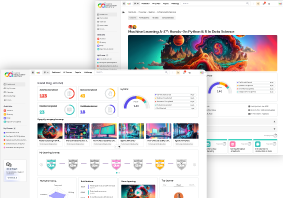
Jarvi positions itself as a single platform that combines ATS, CRM, multichannel outreach and embedded AI in one plan. Its published starting price is $158/user/month (or $1,899/year billed annually), and the vendor advertises hands‑on migration at no extra cost to transfer candidates, companies, positions, notes and historical records into a structured format.
The vendor material cites a client case where automation reduced invoice processing from 1.5 days to minutes and produced a four‑fold increase in placement pace for that firm over a three‑month window versus its prior year; the same source states Jarvi cuts recruiter work by more than 350 hours per user annually by replacing multiple disconnected tools. If you evaluate Jarvi, test the open API and webhook flows the vendor uses to synchronise billing and external systems, and ask for documentation showing what the free migration service covers and how historical notes are preserved.
Recruiterflow and Loxo: AI agents vs talent‑intelligence platforms
Recruiterflow targets teams that want an AI‑agent model layered onto a core ATS/CRM. The Platform Plan starts at $149/user/month; advanced automation such as the AIRA notetaker, matchmaker and omnichannel sync sit on an AIRA Plan offered at custom pricing. Evaluate Recruiterflow by running its Chrome bulk‑sourcing flow and by checking which AIRA agents require the higher tier so you can price any upgrade accurately.
Loxo takes a talent‑intelligence approach, combining a proprietary Knowledge Graph and deep‑learning models with sourcing and outreach. It has a Free tier (listed with 1 user and unlimited jobs/projects in the vendor materials) and a Basic level at $209/user/month. Loxo’s native enrichment and ranking improve with consistent data capture, so a team trial that measures recommendations versus hires will show whether the Knowledge Graph pays for itself in your use case.
Enterprise options and specialised stacks: Bullhorn, Spott, Crelate and Atlas
Bullhorn targets midsize and enterprise firms that need configurability and a partner marketplace. Its published start price is $99/user/month for core ATS & CRM functionality, but implementation can add materially to the bill — vendor guidance shows implementation costs ranging from $1,000 to $50,000. Many advanced automations and analytics are gated behind higher tiers or add‑ons, so procurement should budget for both licence and onboarding costs.
Spott and Crelate emphasise AI embedded in everyday workflows with differing operational strengths: Spott starts at $149/user/month, advertises explainable matching and a four‑week migration timeline, and offers EU hosting and GDPR alignment; Crelate begins at $119/user/month for its Business plan and adds back‑office tools such as invoicing and time tracking for staffing workflows at higher tiers. Atlas provides an enterprise Memory and agent model and uses custom pricing; its value depends on consistent, platform‑wide data capture and upfront configuration.
A pragmatic migration strategy and vendor checklist
Plan migrations in phases: extract a representative dataset, map hiring stages, and pilot one team before a full cutover. Confirm which records move during the free migration (for vendors that offer it), how attachments and historical notes are handled, and whether the vendor will reformat and validate data as part of the service.
Before signing, require trial evidence of the specific workflows you use: run at least one sourced campaign from a proposed platform to verify LinkedIn and email sequencing, test any advertised AI agent on a sample pipeline, and ask vendors to demonstrate API triggers for billing and time tracking. Include rollback and support SLAs in contracts so you can measure time to remediate issues if the first phase needs correction.
| Tool | Best for | Key advantage | Starting price |
|---|---|---|---|
| Jarvi | Agencies wanting ATS, CRM and native AI together | Single plan with built‑in AI, hands‑on migration and six‑channel outreach | $158/user/month |
| Recruiterflow | Teams that want AI agents for routine recruiting tasks | Platform plan plus optional AIRA agents for automation | $149/user/month |
| Loxo | Teams consolidating sourcing, outreach and talent intelligence | Proprietary Knowledge Graph and free entry tier | Free tier; Basic $209/user/month |
| Bullhorn | Enterprise firms needing scalability and integrations | Configurable platform with a Marketplace and Amplify AI | Starts at $99/user/month (implementation $1,000–$50,000) |
| Spott | Firms wanting explainable AI matching and EU data hosting | AI embedded across plans and a four‑week migration option | $149/user/month |
| Crelate | Recruiting and staffing teams needing back‑office features | End‑to‑end platform with invoicing and time tracking | $119/user/month |
| Atlas | Enterprise users seeking structured recruitment memory and agents | Atlas Memory and CandidateGPT/ClientGPT for retrieval and actions | Custom pricing |
How the market could evolve for buyers
The case for
- Consolidation into all‑in‑one platforms will continue to reduce subscription sprawl and surface predictable per‑user pricing for agencies that adopt end‑to‑end systems.
- Native AI features embedded in base plans lower the marginal cost of automation for small teams, provided vendors keep those capabilities inclusive rather than gating them behind expensive tiers.
The case against
- Vendors that require custom pricing for advanced AI (Recruiterflow’s AIRA plan, Atlas and some Loxo tiers) will force procurement to budget for upgrades and make feature parity comparisons harder.
- High implementation fees — exemplified by Bullhorn’s $1,000 to $50,000 implementation range — will keep smaller firms on lighter, less integrated stacks unless vendors offer migration credits or fixed onboarding packages.
What to be careful about
- Implementation and migration fees that can materially exceed licence costs, as illustrated by Bullhorn’s documented $1,000–$50,000 implementation range.
- Feature gating where core AI or omnichannel sync is available only on higher tiers (for example, Recruiterflow’s advanced AIRA capabilities require a custom‑priced plan).
- AI effectiveness tied to consistent data capture: platforms that rely on internal Knowledge Graphs or Memory systems (Loxo, Atlas) underperform if the team does not feed them continuous, structured data.
- Additional usage costs such as data enrichment or contact‑finding credits (noted for Spott and some Loxo configurations) that raise the total cost of ownership.
The bottom line
For agencies ready to move away from a patchwork of point tools, the choice comes down to two trade‑offs: predictable, all‑inclusive licensing versus a modular stack where advanced AI or integrations require upgrades. Jarvi and Spott pitch inclusive plans and hands‑on migration to reduce onboarding risk; Recruiterflow and Loxo offer strong AI approaches but push some capabilities into higher tiers; Bullhorn and Atlas remain attractive to enterprise buyers that value configurability but must budget for implementation. Run side‑by‑side trials that exercise your real workflows, insist on documented migration scope, and compare total cost of ownership including any enrichment credits or onboarding fees.
What to watch
- Watch for vendors’ published migration documentation and scope sheets; no date has been set.
- Watch for product release notes that expand AI‑agent omnichannel sync; no date has been set.
Frequently asked questions
Which alternative includes migration support without extra fees?
Jarvi advertises hands‑on migration at no extra cost and provides a free trial; Spott also cites a four‑week migration timeline in its vendor materials. Verify with each vendor what records and attachments are included before you sign.
Which option is the lowest published entry price?
Loxo offers a Free tier for initial evaluation, while Bullhorn lists an entry price starting at $99/user/month for core ATS & CRM functionality.
Which platforms require custom pricing for advanced AI features?
Recruiterflow places advanced AIRA agents on a custom‑priced AIRA Plan, Atlas uses custom pricing for its Memory and agent capabilities, and several vendors list professional or enterprise tiers as custom‑priced in their materials.
Related reading
This article is information, not financial advice. Anyone acting on it should do their own checks.