
Estimated reading time: 5 minutes · Last updated: 2026-08-24
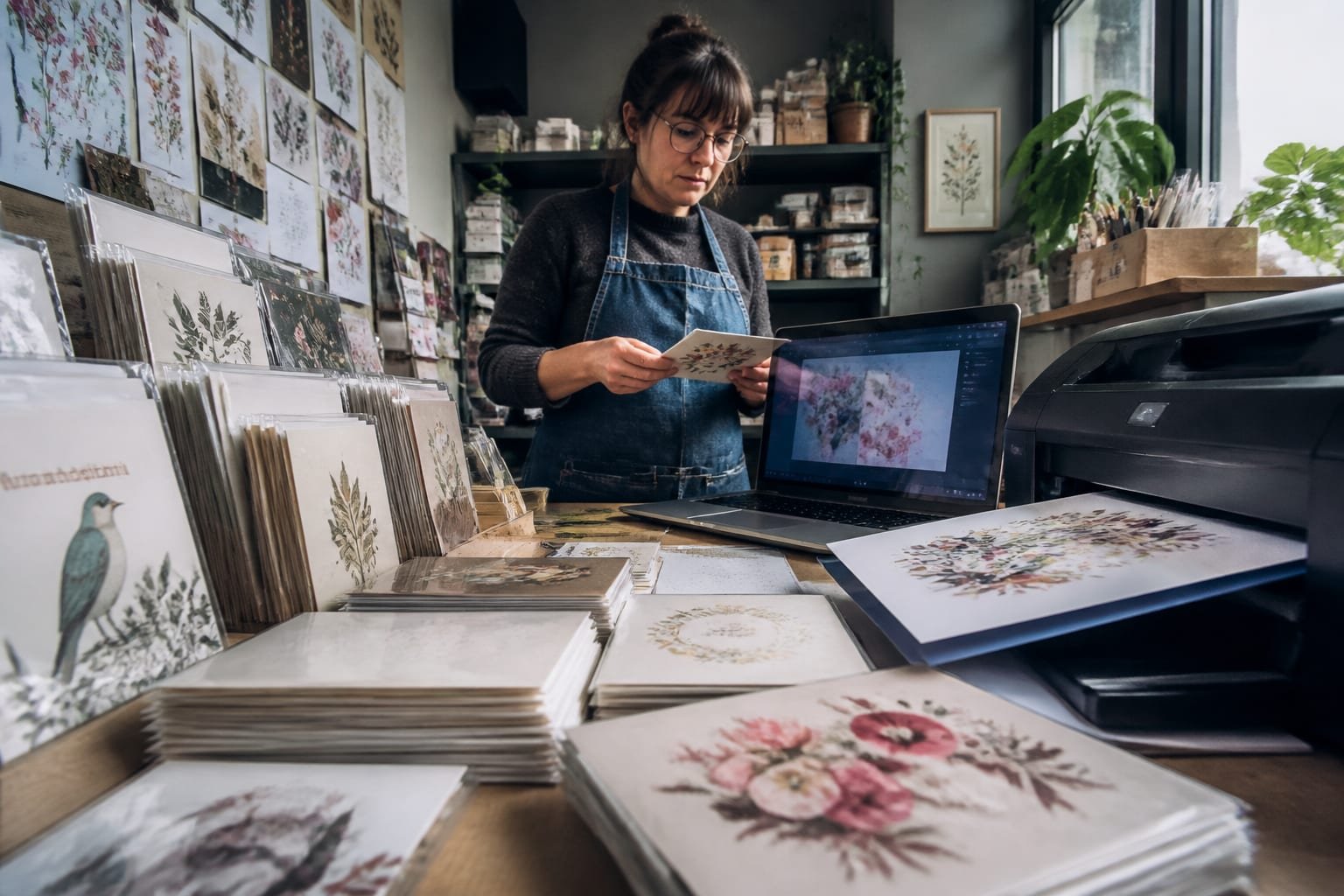
Belfast designers and several venues have begun refusing generative-AI artwork they call "AI slop", arguing it undercuts trained creatives and produces low-quality promotional material. As first reported by BBC News, card-maker Chris Ferry publicly declined to print a birthday card a customer produced with ChatGPT and said his video about the issue attracted thousands of engagements online. Freelance designer Frances Smyth, a part-time lecturer at Ulster University who graduated in 2021, says agencies and hospitality businesses are increasingly weighing short-term savings from AI against a longer-term loss of creative jobs. Venue owners including the American Bar say they will not use AI-made posters or music on their premises.
be coming to me asking me to print a birthday card you've made on ChatGPT ever again
Chris Ferry
Key takeaways
- Designer refusal: Chris Ferry publicly refused to print a birthday card generated on ChatGPT and said his social post drew thousands of engagements online.
- Venue bans: The American Bar in Belfast has declared itself an AI-free zone and will not use AI-made artistic material.
- Academic voice: Frances Smyth, who graduated in 2021 and now teaches part-time at Ulster University, says AI prompts a damaging shift in how clients source creative work.
- Business reversals: Three Rivers Restaurant used AI posters during a local festival but then decided to stop using AI-made art.
Table of contents
- Key takeaways
- What people mean by 'AI slop' and why it matters
- How creators are pushing back in practice
- Venues and businesses choosing a no-AI stance
- What this friction means for the wider creative economy
- Two plausible trajectories for local creative work
- What to be careful about
- Frequently asked questions
What people mean by 'AI slop' and why it matters
Local creative communities use the shorthand 'AI slop' to describe quickly produced imagery from generative systems that lacks the craft and context of human-made work. Designers say these outputs are often formulaic, rely on blended references and are used by small businesses to save time and cost on posters, menus and promotional art.
That pattern matters because customers who once commissioned a designer now have a low-cost alternative they can print themselves or ask a local shop to reproduce. For small studios and independent makers, that reduces demand for bespoke design and the skilled labour that supports it. The phrase 'AI slop' captures both the perceived visual thinness of the outputs and the worry that they commoditise cultural detail.
How creators are pushing back in practice
Some creators are making public stands rather than quietly competing on price. Card-maker Chris Ferry refused to accept a customer’s AI-generated design for printing and posted a video that, he says, drew thousands of engagements online. He framed the choice as one of principle: he will convert a customer’s idea into a finished design, not simply reproduce an AI prompt result.
Freelance designer and lecturer Frances Smyth describes a similar instinct among graduates and practising artists. Smyth says clients are increasingly tempted to test ChatGPT or image generators as a first pass, which can hollow out smaller commissions. She calls AI outputs 'regurgitative and soulless' and prefers even hand-drawn or rough work that shows a human decision-making process.
Venues and businesses choosing a no-AI stance
A number of hospitality venues in Belfast have made explicit policies to avoid AI-made creative content. The American Bar declared itself an AI-free zone and said the decision covered music, posters and social content; co-owner Tomas Gorman framed it as a solidarity move with local artists. Mandela Hall, inside Queen’s University Students' Union, has taken a similar principled position.
Practical reversals are also visible. Three Rivers Restaurant used AI-generated flyers during a local festival but removed them after staff and patrons reacted, and the owner subsequently announced they would stop using AI for promotional art. Those on-the-ground choices show how small operators balance convenience, cost and community reaction when deciding whether to adopt generative tools.
What this friction means for the wider creative economy
The debate in Belfast illustrates a broader tension: generative tools reduce marginal production costs but can erode markets for bespoke craft. Agencies that aim to cut marketing budgets may turn to AI for rapid outputs, shrinking the pool of paid commissions for freelance designers and illustrators. Creatives warn that an accumulation of small savings by many clients will eventually translate into fewer full-time roles and lower fees.
At the same time, some designers see a path that preserves work: emphasise local knowledge, humour and cultural specificity that off-the-shelf prompts cannot reproduce. That argument underpins choices by venues and makers who explicitly seek human-made work. If clients consistently value and pay for those qualities, a segment of the market can remain viable despite widespread tool adoption.
| Name | Location | Stance | Reason given |
|---|---|---|---|
| The American Bar | Belfast | AI-free zone | Solidarity with local artists (Tomas Gorman) |
| Mandela Hall | Queen's University Students' Union | Principled avoidance | Protect creative livelihoods |
| Three Rivers Restaurant | Belfast | Used then stopped | Decided AI posters were unfair to designers (owner Mal Houston) |
| Ferry Clever / Chris Ferry | Londonderry/Derry | Refuses to print AI-made cards | Will not reproduce ChatGPT-generated designs |
Two plausible trajectories for local creative work
The case for
- If clients prioritise cultural specificity and pay for custom work, independent designers can retain a stable niche and charge premium rates for authentic output.
- Venue-level policies and consumer campaigns could create local demand for human-made art, sustaining micro-economies around events and hospitality.
The case against
- Widespread cost-cutting that favours instant AI content could reduce the volume of paid commissions, shrinking opportunities for junior designers and recent graduates.
- If agencies and chains adopt generative tools at scale, price points for simple promotional work may collapse, pressuring independents to either compete on cost or pivot away from standard briefs.
What to be careful about
- Loss of entry-level commissions for freelance designers as small clients substitute AI for paid work.
- Normalisation of generic imagery across local culture, reducing distinctiveness in posters, menus and event branding.
- Reputational risk for venues that flip policies (use then ban AI), which can alienate customers or creators depending on the choice.
The bottom line
The reaction in Belfast frames a simple choice for clients and small businesses: convenience and lower cost, or paying for human craft and local cultural knowledge. Named creators and venue owners have already tested both routes — some used AI briefly, others have banned it outright — and their decisions reveal the trade-offs at stake. Whether a robust market for bespoke work survives will depend on sustained client demand, possible collective action by venues and arts bodies, and whether designers can clearly communicate what AI cannot replicate about locality and humour.
What to watch
- Watch for any formal policy statements from Belfast venue groups or student unions; no date has been set.
- Watch for local arts or trade associations to issue guidance on using generative AI in commissions; no date has been set.
Frequently asked questions
What did Chris Ferry do when a customer brought an AI-made card?
Chris Ferry refused to print the ChatGPT-generated birthday card and posted a video about his stance, which the source says attracted thousands of engagements online.
Which venues in Belfast have adopted an anti-AI position?
The American Bar declared itself an AI-free zone and Mandela Hall has taken a similar principled approach; both cited support for local artists and cultural value as reasons.
How do local designers describe generative-AI outputs?
Freelance designer Frances Smyth describes many AI outputs as 'regurgitative and soulless' and warns that agencies seeking savings may favour AI over paid creative work; Smyth graduated in 2021 and now lectures part-time at Ulster University.
Related reading