
Estimated reading time: 6 minutes · Last updated:
GE Appliances has deployed more than 800 artificial-intelligence agents across its factories, warehouses and supply chain, using Google Cloud’s Gemini Enterprise inside a platform the company calls Brilliant Factory, GE Appliances said in its announcement. One agent that automated supplier communications reduced back orders by 25% after handling routine queries to more than 600 suppliers. The agents surface production, parts and shift data in minutes so employees can answer operational questions without waiting for a data scientist. These changes sit on a broader investment: GE Appliances has put more than $3.5 billion into U.S. manufacturing since 2016.
AI is now integral to the way work gets done at GE Appliances.
Mandar Deo, chief digital officer, GE Appliances
Key takeaways
- Agent count: GE Appliances has deployed more than 800 AI agents across manufacturing, logistics and supply chain.
- Supplier automation impact: One agent automated routine queries to over 600 suppliers and cut back orders by 25%.
- Company investment: Since 2016, GE Appliances has poured more than $3.5 billion into manufacturing operations in the United States.
- Georgia expansion: A Roper Corporation plant in LaFayette, Georgia completed a $180 million expansion, added over 600 jobs and tripled its use of robots.
- Parts volume: About 27 million parts are shipped each year by GE Appliances’ parts group to more than 700 suppliers, and the company maintains support for older models for at least seven years.
Table of contents
- Key takeaways
- How GE Appliances wired AI into operational decision-making
- Where the agents are already saving time and cost
- The Georgia plant as a laboratory for scale
- Operational scope, limits and what the rollout does not yet say
- The case for and against wider gains
- What to be careful about
- Frequently asked questions
How GE Appliances wired AI into operational decision-making
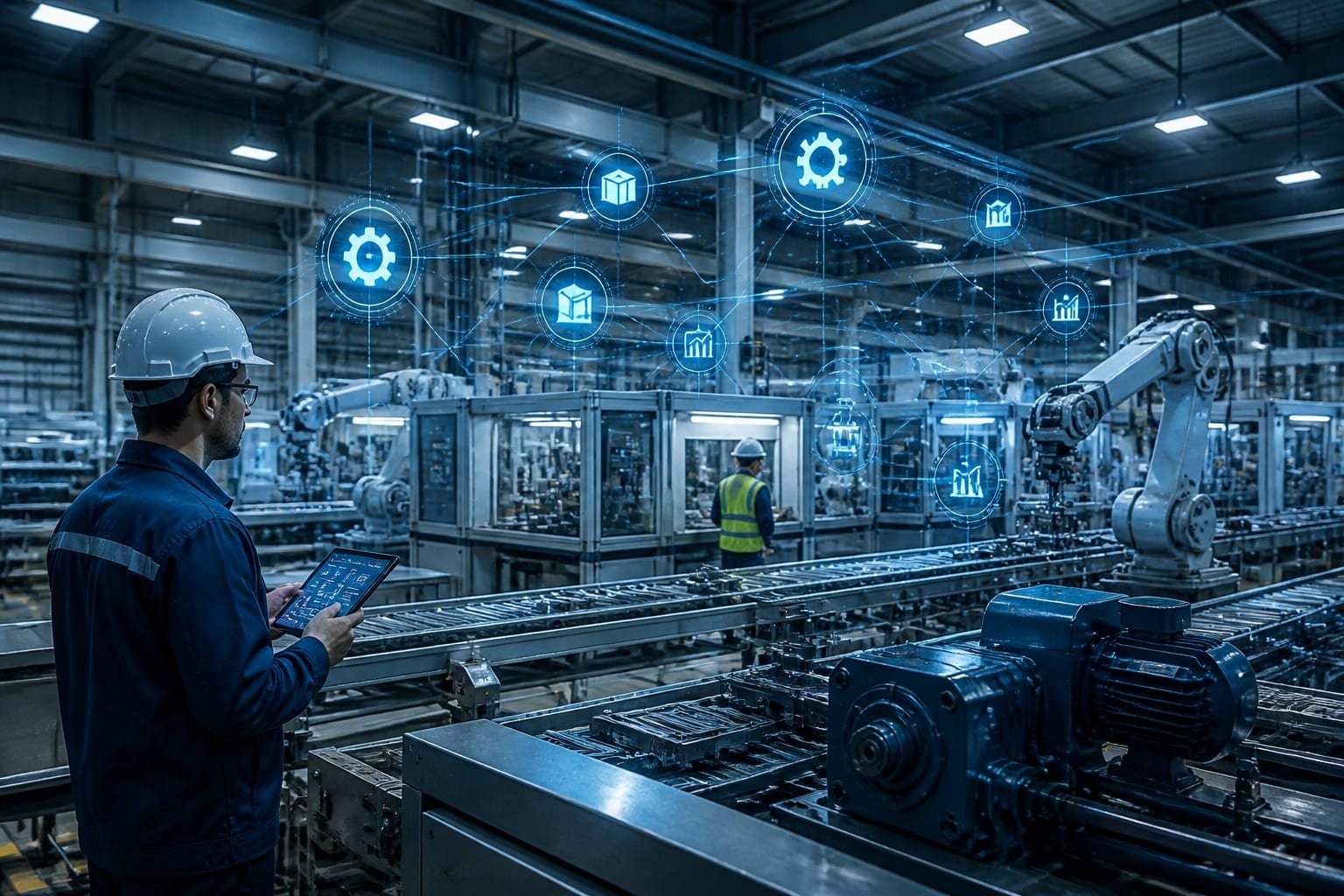
GE Appliances built a network of software agents that sit on top of a data platform the company calls Brilliant Factory and on Google Cloud’s Gemini Enterprise, the firm said in its announcement. The agents are configured to answer direct queries from plant staff, surface shift-level production metrics, and flag quality issues without a data scientist having to assemble reports first.
That change alters who reads the data and how fast they act. Where plant managers once waited for batch reports, operators can now inspect a full shift’s worth of output and part-usage in minutes. The platform combines line sensors, inventory records and staff logs so conversational queries return operational answers rather than raw extracts.
GE Appliances describes those agents as context-aware tools that feed both immediate fixes—like stopping a defective run—and higher-level decisions, such as adjusting what to produce on a flexible line. The system’s reach includes manufacturing, logistics and supply-chain workflows rather than a single point-solution.
Where the agents are already saving time and cost
The clearest, attributable result GE Appliances shared is a supplier communications agent built in 2025. That single agent automated routine order-status queries to more than 600 suppliers and, the company says, cut back orders by 25%, freeing staff to handle higher-value tasks.
Another application scans customer feedback and images to surface potential defects earlier in the flow. Early detection shortens the time between a fault appearing on a line and corrective action, which reduces scrap, warranty exposure and rework. At scale—given the company’s multi-plant footprint—those marginal gains compound into measurable operational savings.
Another example is the parts operation: it moves roughly 27 million parts annually to over 700 suppliers and keeps legacy models supported for at least seven years. Automating routine interactions across that network can materially reduce inventory churn, curb excess ordering and lower the manual effort needed to resolve supplier queries.
The Georgia plant as a laboratory for scale
GE Appliances pointed to a Roper Corporation facility in LaFayette, Georgia to show what the investment buys. The plant completed a $180 million expansion—$60 million more than originally planned—and the company says the work added more than 600 jobs while more than tripling the plant’s use of robots.
At LaFayette, production lines are set up so the same equipment can produce gas, electric and induction ranges, but that flexibility only pays off when production choices and material flows respond to real‑time demand signals. Tying AI agents to those flexible lines and to robotic assembly cuts downtime during configuration changes and shortens the interval between a demand shift and a change in throughput.
Plant manager Luther Ingram described that mix of automation and local staff skill as a route to higher-quality output and faster product introductions. The Georgia example ties the $3.5 billion-plus U.S. investment the company reports since 2016 to specific operational changes on one campus.
Operational scope, limits and what the rollout does not yet say
The rollout documented by GE Appliances covers manufacturing, logistics and supply-chain functions, but the company’s announcement does not disclose every operational metric that readers might want: it does not provide an overall percentage reduction in downtime, a dollar figure for cost savings, or the precise head count shifted from routine tasks to higher-value roles.
Adoption across lines and plants can vary; the company describes agent use cases and gives specific examples, but it does not publish a deployment timeline for the full estate. That matters because the marginal value of an agent depends on the set of data sources it can access and the consistency of those sources across plants.
Lastly, the agents run on proprietary tooling and on Google Cloud’s Gemini Enterprise according to GE Appliances, which raises implementation questions—integration work, data governance and model update cadence—that the announcement does not quantify. Those operational details will determine how repeatable these gains are at other manufacturers.
The case for and against wider gains
The case for
- Operational answers delivered in minutes reduce the lag between detection and action, shrinking scrap and rework if models remain accurate.
- Automation of routine supplier queries and feedback triage can free staff for higher-value work, enabling productivity gains without headcount cuts.
- A flexible line that responds to real-time demand signals can improve on-shelf availability and reduce excess inventory across a national network.
The case against
- Benefits depend on data quality and integration; plants with inconsistent telemetry or fragmented IT stacks will capture fewer gains.
- The firm did not publish dollar savings, deployment timelines or model governance details, making it harder to judge return on investment externally.
- Model drift, supplier buy-in and the cost of ongoing maintenance could erode efficiency gains if not managed with clear KPIs and resourcing.
What to be careful about
- The announcement does not quantify cumulative cost savings, so external observers cannot verify ROI assumptions from the examples given.
- A rollout that uses company-specific platforms and Google Cloud tooling could create lock-in or require expensive custom integration for other manufacturers.
- Automating supplier communications at scale depends on supplier digital readiness; failures or misunderstandings could create supply disruptions if not supervised.
The bottom line
GE Appliances’ announcement links three threads: heavy capital investment in U.S. factories, flexible production lines at a scaled plant in Georgia, and a broad deployment of software agents that turn operational data into quick answers. The supplier-agent example—automating queries to over 600 suppliers and reducing orders by 25%—is a concrete result GE Appliances shares, but the company did not publish an enterprise-wide ROI or deployment timeline. For competitors and suppliers, the practical questions are integration, data quality and maintenance costs; for investors in manufacturing tech, the Georgia campus shows how capital, robotics and agentic AI can combine to change how a plant runs day to day.
What to watch
- Watch for GE Appliances’ next operational update; no date has been set.
- Watch for a public case study from Google Cloud or GE Appliances on Gemini Enterprise integrations; no date has been set.
Frequently asked questions
How many AI agents has GE Appliances deployed?
GE Appliances says it has deployed more than 800 AI agents across manufacturing, logistics and supply-chain operations.
What measurable result did the supplier agent deliver?
An agent built in 2025 automated routine order-status queries to more than 600 suppliers and, according to GE Appliances, cut back orders by 25%.
What investment underpins this automation effort?
GE Appliances says that since 2016 it has contributed upwards of $3.5 billion to U.S. manufacturing; a Georgia facility received a $180 million expansion that added more than 600 jobs.
Related reading